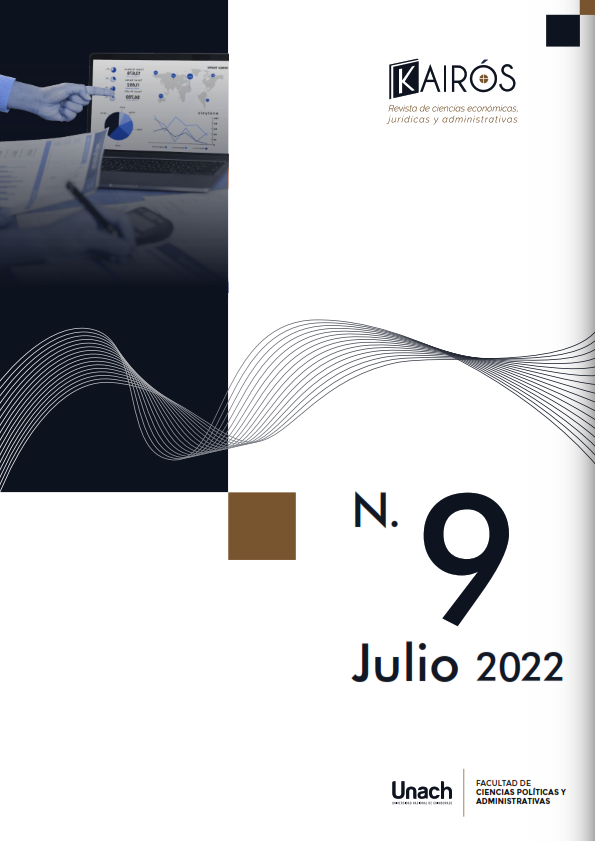
ACCESS TO THE INTERNET AS A FUNDAMENTAL RIGHT: EDUCATION IN TIMES OF COVID-19
DOI:
https://doi.org/10.37135/kai.03.09.08Keywords:
Internet access, fundamental right, education, COVID 19Abstract
The change in the modality of education in the context of the pandemic caused by COVID-19 was prompted by the instrumentalization of the internet as a means of access to education at all levels of education. The objective was to analyze access to the internet as a fundamental right and the State's responsibility toward education in times of COVID-19, for which a critical analysis of the doctrine, regulations, and jurisprudence was carried out in light of international human rights instruments. In conclusion, a flawed economic, political, and social structure of the State in liaising efficiently with the pandemic affected the exercise of the right to education because of the impossibility to freely access mandatory technological tools, accentuating the inequality of digital non-citizens.
Downloads
Downloads
Published
Issue
Section
License
Copyright (c) 2022 Kairos: Journal of Economy, Law and Administrative Sciences

This work is licensed under a Creative Commons Attribution-NonCommercial-NoDerivatives 4.0 International License.
Copyright
By submitting his work to Kairós, Journal of economic, law and administrative sciences, the author assigns the editor in a non-exclusive manner the rights of reproduction, publication, public communication, distribution and transformation so that it can be published in the journal in electronic version and can be consulted from the magazine's website.
Likewise, the authors authorize their article to be published under a Creative Commons Attribution CC BY-NC-ND license.
The authors who publish in this journal agree to the following terms:
The authors retain the copyright and guarantee the journal the right to be the first publication of the work as well as licensed under a Creative Commons Attribution CC BY-NC-ND license.
Authors may separately establish additional agreements for the non-exclusive distribution of the version of the work published in the journal (for example, placing it in an institutional repository or publishing it in a book), with an acknowledgment of its initial publication in this journal.
Authors are allowed and encouraged to post their work electronically (for example, in institutional repositories or on their own website) after publication, as it can lead to productive exchanges, as well as earlier and greater citation. of published works (See The Effect of Open Access).